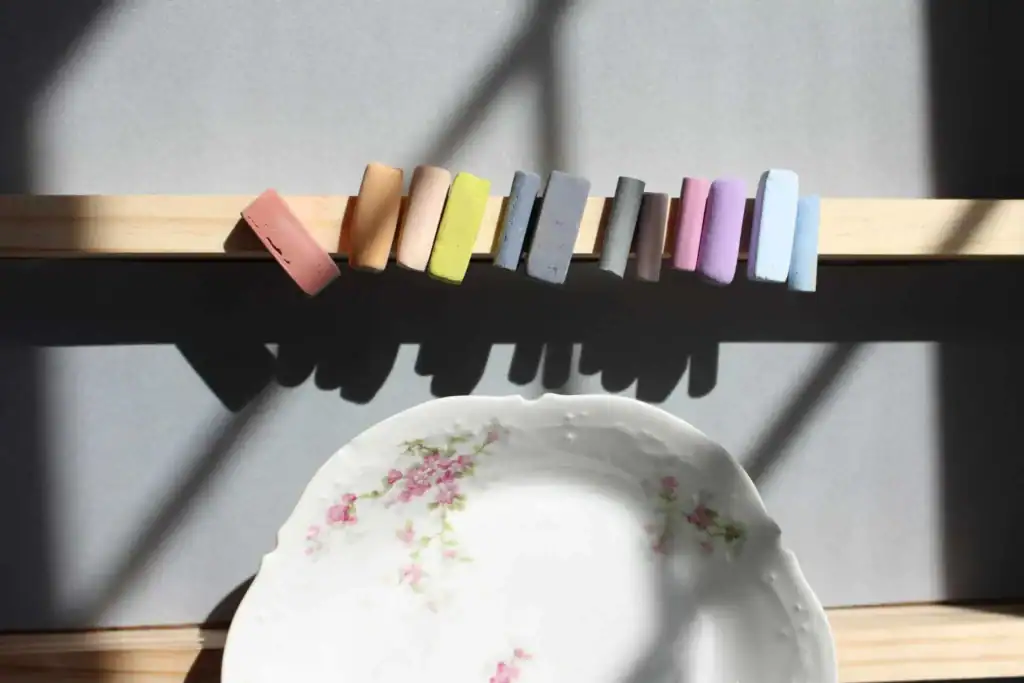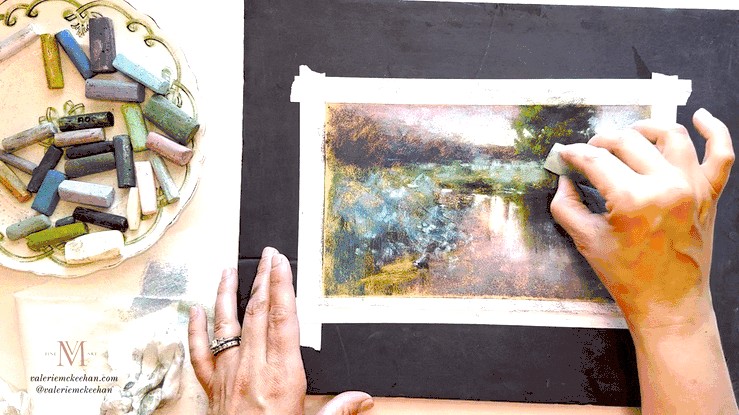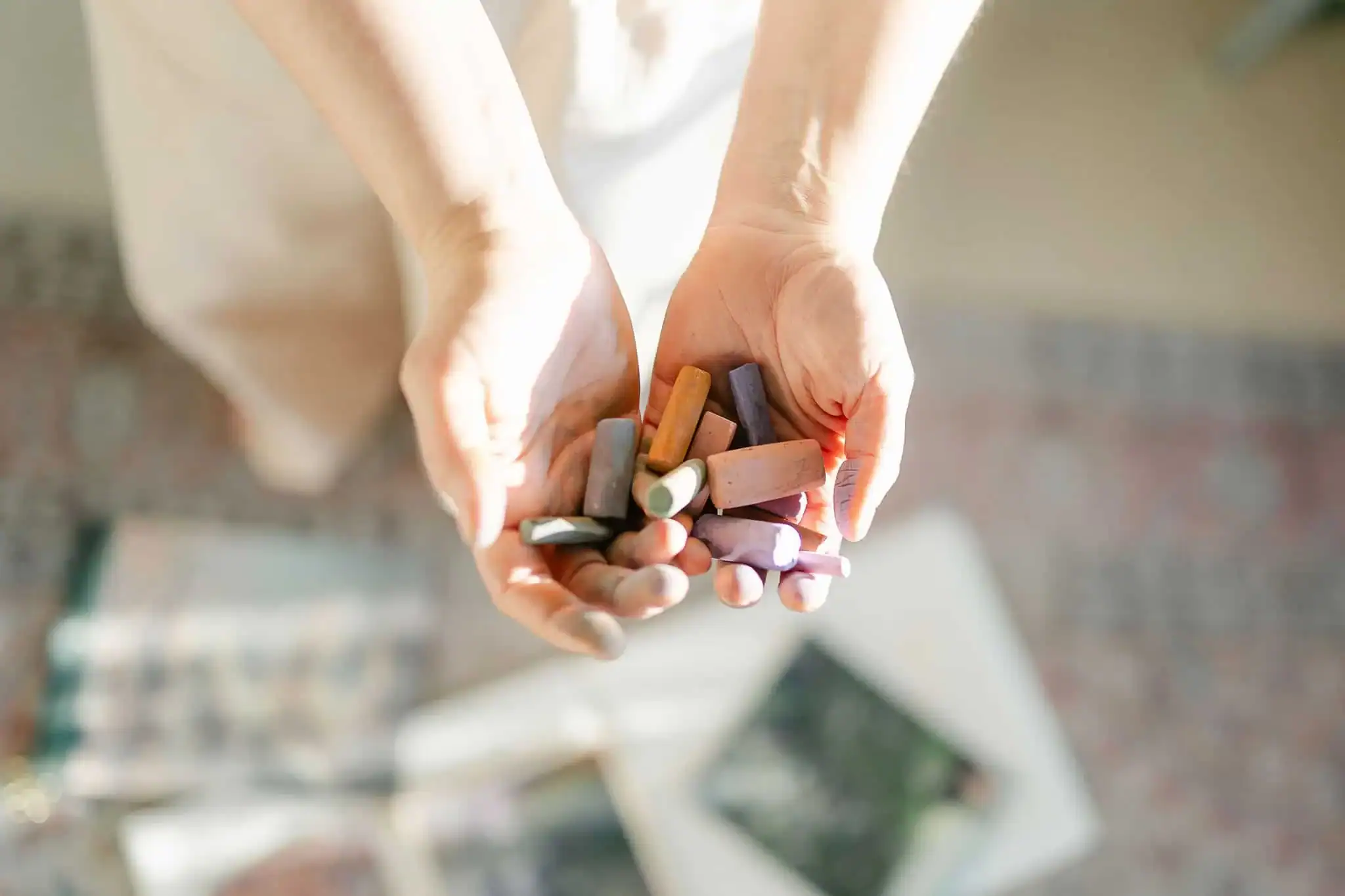
When I first started painting with soft pastel, one of the things I loved immediately was how connected I felt to the medium. There’s nothing separating your hand from the color. You pick up a pastel, find an edge or turn it on its side, and put pigment directly onto the surface.
That directness is part of what makes soft pastel so wonderful, but I also know it can make that first box of pastels feel a little intimidating. There are all these beautiful colors in front of you, no brush or obvious process to follow, and you might find yourself wondering, Okay…what am I actually supposed to do with these?
If that’s where you are, I want you to know that you don’t need to understand every technique before you begin. Soft pastel is an incredibly tactile medium, and some of what you’re learning simply can’t happen by reading about it. You learn by feeling how a pastel moves across the paper, seeing what happens when one color meets another, and discovering the marks that naturally come from your own hand.
So rather than trying to teach you an entire pastel painting process in an article, I want to help you understand a few of the things that make this medium different and what I wish every beginner knew before making those first marks.
How Do You Actually Use a Soft Pastel?
At its simplest, you hold the pastel directly in your hand and apply the pigment to your surface. But there are so many possibilities inside that simple act.
The side of a pastel creates a very different mark from an edge. A barely-there touch behaves differently than firm pressure. As you use your pastels, their shapes begin to change, new edges emerge, and you start turning them instinctively in your hand to find the mark you’re looking for.
Different pastels behave differently, too. Some are harder and give you a different kind of control, while very soft pastels can lay down incredibly rich pigment. Eventually, the hardness, shape and feel of a pastel become part of why you choose it, not just the color written on the wrapper.
You do not need to understand all of this before you start. Getting to know your pastels is part of learning to paint with them.
Your Paper Matters More Than You Might Expect
If you’ve tried soft pastels before and felt like the pigment wasn’t sticking to the paper, or everything seemed to slide around rather than build, there’s a chance the problem wasn’t you at all.
Pastel needs a surface with some texture to hold the pigment. We call that texture the tooth of the paper, and the surface you choose can make a tremendous difference in how your pastels behave and how enjoyable they are to use.
I love working on sanded surfaces for exactly this reason, but you absolutely don’t need to invest in expensive professional paper just to find out whether you enjoy soft pastel. There are inexpensive ways to create a wonderful surface at home, too.
I’ve put my specific beginner pastel, paper and supply recommendations in my Soft Pastel Supplies for Beginners guide, so start there if you’re still gathering what you need.
One of the Biggest Beginner Mistakes Is Simply Pressing Too Hard
This is one of those things that’s much easier to understand once you see it demonstrated, but it’s worth knowing before you make your first painting.
More pressure isn’t necessarily better with soft pastel.
A beautiful soft pastel can deposit a surprising amount of pigment onto the paper, and if you apply too much too quickly, you can make it harder to build additional color on top. This is one of the reasons you’ll see experienced pastel artists vary their pressure throughout a painting instead of treating every mark the same way.
It’s also where some of the personality of pastel begins to emerge. A very light application can allow earlier colors to remain visible beneath it, while a stronger mark can become something much more definite.
Learning when to do each is part of learning the medium. For now, simply know that you don’t need to push the pastel into the paper to make it work.
Soft Pastel Is Built in Layers
This was one of the things that made me fall in love with pastel.
When you look closely at a pastel painting, you may see tiny pieces of color from earlier layers still showing through. Those colors interact with the marks above them and create a richness that can disappear if everything is completely covered or blended together.
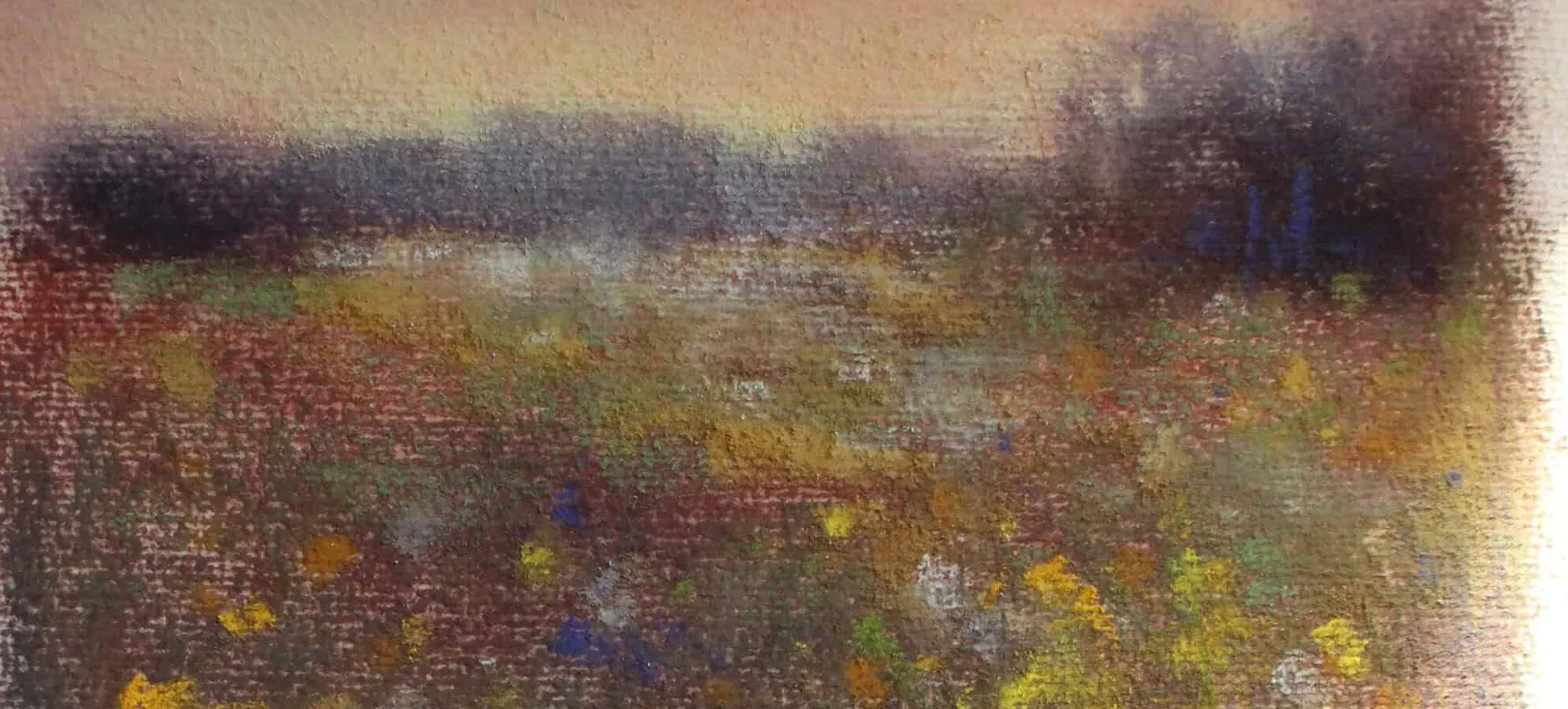
I don’t approach each new layer as something that needs to hide what came before. Often, I want some of that earlier color to remain.
This is also why I encourage beginners not to immediately smooth everything together with their fingers. You certainly can blend soft pastel, and there are times when I do, but blending and layering aren’t the same thing. Leaving some marks and colors intact can create beautiful variation and life in a painting.
Knowing when to layer, when to blend and how much pressure to use is something I demonstrate in Discovering Soft Pastel, because it’s much easier to understand when you can actually watch the pigment behave on the surface.
Don’t Let All Those Beautiful Colors Distract You From Value
Color is probably one of the reasons you’re interested in soft pastel in the first place. I completely understand. There is something about opening a box filled with beautiful pastel sticks that still gets me.
But one of the most important things you’ll begin learning as you paint is that choosing a pastel isn’t only about choosing a beautiful color.
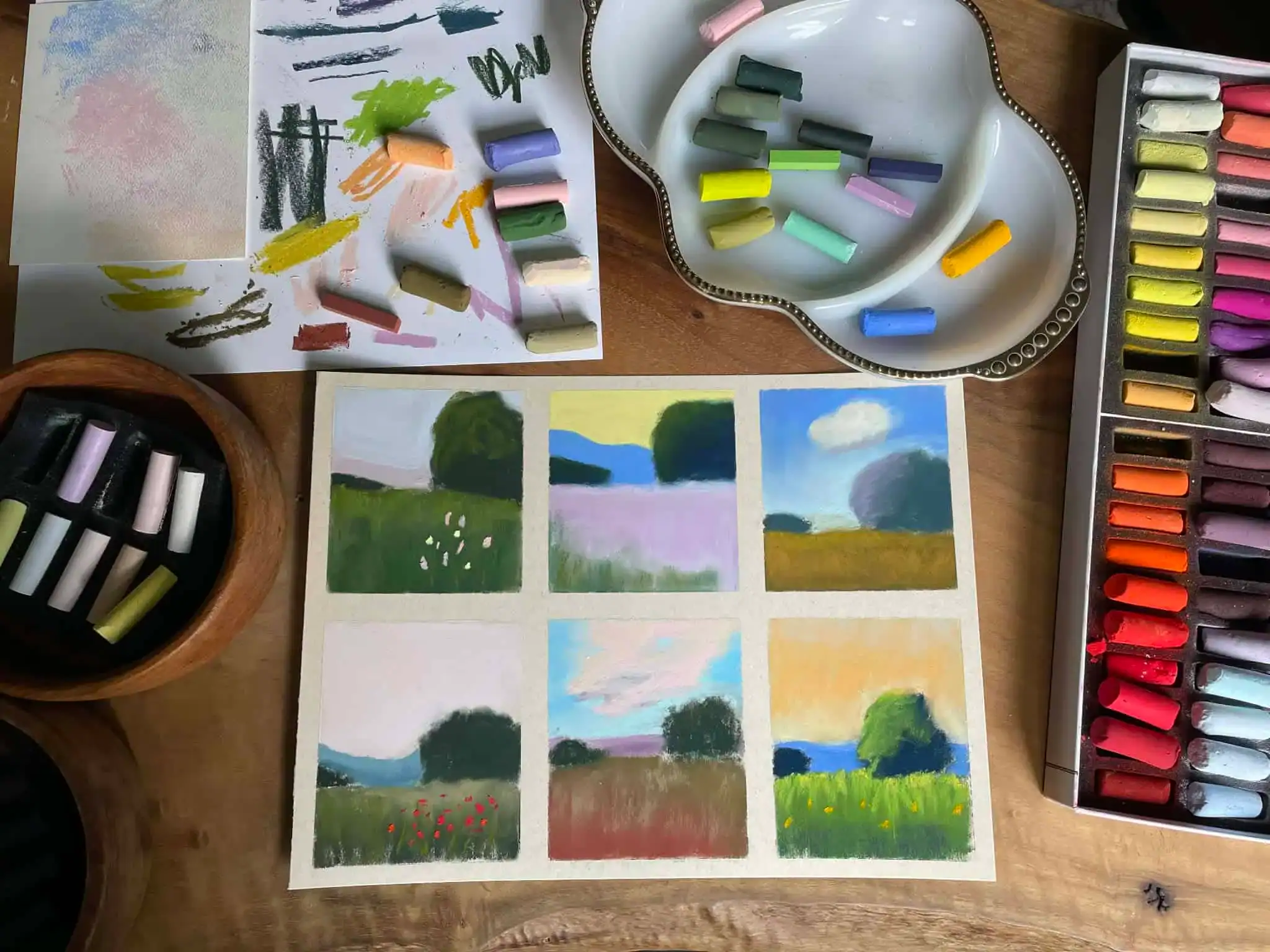
You’ll also start noticing value, which simply means how light or dark a color is.
Value helps give a painting its structure. It helps us create depth, separate shapes and make light actually feel like light. As you become more comfortable with pastel, you’ll begin noticing value alongside color instead of seeing color alone.
You don’t need to master color theory before you make your first painting. I would much rather have you begin noticing these things through painting than convince yourself you need another month of studying before you’re ready.
You Don’t Have to Paint Every Detail You See
This may be one of the most freeing things to discover as an artist.
When we look at a landscape, our brains immediately begin identifying things. There’s a tree. There’s a flower. There’s a cloud. There’s a blade of grass.
And then we feel like we need to paint all of them.
You don’t.
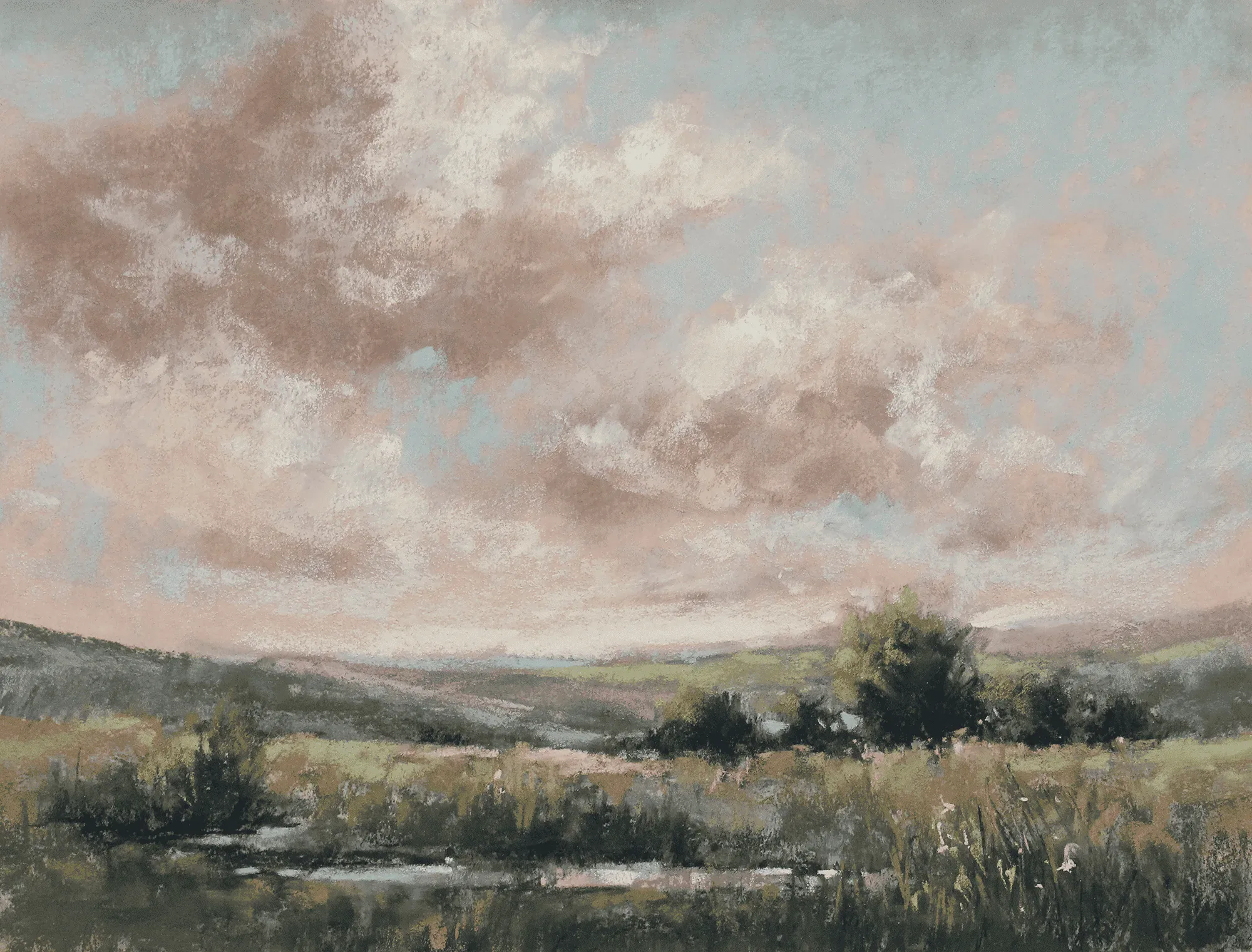
I want you to begin looking for shapes, areas of light and dark, relationships between colors, and the feeling of what you’re seeing. A few beautiful marks can suggest something without explaining every detail.
That’s especially true in the way I love to paint. I’m much more interested in creating an impression of a place and allowing the viewer to experience it than perfectly documenting every object in front of me.
The more you paint, the more you’ll begin discovering what you notice and what you want to say about what you’re seeing. That’s when painting becomes much more than following someone else’s marks.
Your First Painting Doesn’t Need to Prove Anything
I think one of the easiest ways to take the joy out of trying a new medium is deciding that the first thing you make needs to be good.
It doesn’t.
You are learning how the pastel feels against the surface. You’re learning what happens when colors meet. You’re learning what a light touch does compared with a stronger one. You’re beginning to see value instead of only color. You’re discovering which marks feel natural in your hand.
All of that is part of making art.
I can teach you technique, but ultimately I want those techniques to give you more freedom, not more rules to worry about. The goal isn’t to perfectly reproduce the way I make a mark. It’s to give you enough understanding of the medium that eventually you can make choices of your own.
That takes some time, and I think there’s something really beautiful about being a beginner and allowing yourself to be one.
START HERE
So Where Should a Beginner Actually Start?
If you don’t own pastels yet, start with my Soft Pastel Supplies for Beginners guide. You don’t need every color or the most expensive supplies to begin.
If you already have pastels, make some marks. Notice the difference between the side and the edge. Experiment with lighter and stronger pressure. Put one color near another and see what happens. You don’t even need to call it a painting yet.
And when you’re ready to go from experimenting with the materials to actually learning how to build a soft pastel painting, that’s where I would love to show you rather than simply tell you.
Ready to Paint With Me?
I created Discovering Soft Pastel specifically for the person who is looking at these beautiful sticks of color and thinking, I want to do this. I just need someone to show me how.
In this beginner workshop, you’ll paint alongside me as I create a soft pastel landscape from beginning to end. Instead of trying to piece together individual tips, you’ll get to watch how the process actually unfolds: how I make my marks, how I use pressure, how I build color, when I blend, when I leave things alone, and how those early layers gradually become a finished painting.
You don’t need prior art experience, and you don’t need to feel confident before you begin. That’s what the workshop is for.
Or Watch Me Paint First
If you’re curious about soft pastel but aren’t ready for the workshop yet, come spend a little time painting with me on YouTube.
I have plenty of free soft pastel videos where you can watch the medium in action, see how I approach different subjects and techniques, and get a feel for the way I teach.
And when you’re ready to stop watching and start painting alongside me, Discovering Soft Pastel will be waiting for you.